

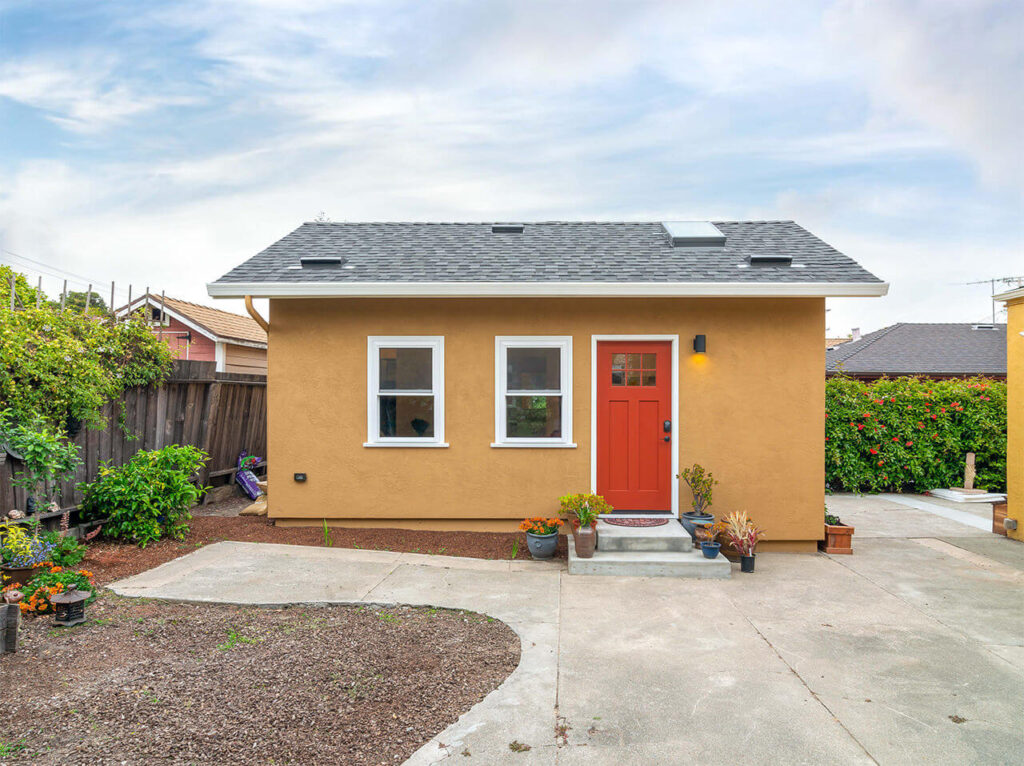
ADU Parking Requirements in Los Angeles: Do You Need a Parking Spot?
One of the most frequent questions homeowners ask when planning an ADU is: “Do I need to provide parking?” The answer has changed dramatically in recent years thanks to California state laws that have eliminated most parking requirements for ADUs. This guide explains current parking rules, exemptions, and what you need to know for your Los Angeles ADU project.
The Short Answer
In most cases, NO – you do NOT need to provide parking for an ADU in Los Angeles.
California state law (Government Code Section 65852.2) prohibits cities from requiring parking for ADUs in most situations, and this state law supersedes local Los Angeles requirements.
Current Parking Requirements Overview
|
ADU Type |
Parking Required? |
Notes |
|---|---|---|
|
Detached ADU |
No |
Exempt under state law |
|
Attached ADU |
No |
Exempt under state law |
|
Garage Conversion ADU |
No |
Can eliminate existing garage without replacement parking |
|
JADU (Junior ADU) |
No |
No additional parking required |
|
ADU within 0.5 mile of transit |
No |
Explicitly exempt |
|
ADU in historic district |
No |
Parking cannot be required if it would harm historic resource |
Understanding the State Law Parking Exemptions
Automatic Exemptions (No Parking Required)
Your ADU is automatically exempt from parking requirements if it meets ANY of these conditions:
- Within 1/2 mile of public transit
- Metro rail stations
- High-frequency bus stops (15-minute or better service)
- Transit corridors
- This exempts most of central Los Angeles
- Within an architecturally and historically significant historic district
- HPOZ (Historic Preservation Overlay Zones)
- National Register districts
- Parking cannot be required if it would harm the historic character
- Part of existing primary residence or accessory structure
- Garage conversions
- Basement conversions
- Attached ADUs
- JADUs within the home
- Where on-street parking permits are required but not offered to ADU occupants
- Many LA neighborhoods with permit parking zones
- If ADU residents can’t get street permits, no parking can be required
- When the ADU is in an existing accessory structure
- Converting existing detached garage, shed, or workshop
- No replacement parking needed
General Rule for All Other ADUs
Even if none of the automatic exemptions apply, cities can require NO MORE than one parking space per ADU or per bedroom, whichever is less.
However, Los Angeles has adopted the state’s permissive approach and generally does not require parking for any ADUs.
Garage Conversion Parking Rules
Can I Convert My Garage Without Replacing Parking?
YES! This is one of the most liberating changes in ADU law.
|
Situation |
Parking Replacement Required? |
|---|---|
|
Converting attached garage to ADU |
NO |
|
Converting detached garage to ADU |
NO |
|
Converting carport to ADU |
NO |
|
Removing garage for new detached ADU |
NO |
|
Property currently doesn’t meet parking minimums |
NO– Cannot be made worse, but no improvement required |
What Happens to Required Main House Parking?
Pre-2020, Los Angeles required specific parking for primary residences (typically 2 spaces). When you convert a garage:
- You are NOT required to replace the garage parking
- Your property becomes “legal non-conforming” for parking
- This does not affect your ability to get permits
- You can use the driveway for parking (if it remains)
- Street parking can fulfill household parking needs
Transit Proximity Exemption Details
What Qualifies as “Transit”?
|
Transit Type |
Exemption Distance |
Service Frequency |
|---|---|---|
|
Metro Rail (Red, Purple, Blue, Expo, Gold, Green Lines) |
1/2 mile from station |
N/A |
|
High-Frequency Bus Stop |
1/2 mile from stop |
15-minute headways or better during peak hours |
|
Bus Rapid Transit |
1/2 mile from station |
N/A |
|
Metrolink Commuter Rail |
1/2 mile from station |
N/A |
How to Verify Transit Proximity
- Go to Google Maps
- Search your property address
- Click “Measure Distance”
- Measure straight-line distance to nearest Metro station or qualifying bus stop
- If under 0.5 miles (2,640 feet), you’re exempt
Major Transit Corridors in LA (All exempt within 1/2 mile):
- Wilshire Boulevard (Metro Purple/Red Lines)
- Expo Line corridor (Downtown to Santa Monica)
- Gold Line (East LA, Pasadena)
- Vermont Avenue
- Crenshaw/LAX Line
- Orange Line (Valley)
- Most of Mid-City, Koreatown, Hollywood
Specific Neighborhood Parking Considerations
High-Demand Parking Areas
Even though parking is not required by code, consider including it in these areas for practical and rental value reasons:
|
Neighborhood Type |
Parking Recommendation |
Reason |
|---|---|---|
|
Westside (Santa Monica, Venice, West LA) |
Highly Recommended |
Limited street parking; ADU rent premium of $150-$300/mo |
|
Beach Communities |
Highly Recommended |
Permit zones; beach visitor impact; tenant demand high |
|
Hollywood Hills |
Recommended |
Narrow streets; limited street parking |
|
Dense Urban Areas (Koreatown, Downtown) |
Optional |
Transit-rich; street parking difficult but tenants expect it less |
|
San Fernando Valley (most areas) |
Optional |
Generally better street parking availability |
|
Near Metro Stations |
Optional |
Transit-oriented tenants; less parking demand |
Parking Options When You Choose to Include It
1. Uncovered Surface Parking
Cost: $3,000 – $8,000
- Simple paved or gravel parking space
- Requires 9′ × 18′ minimum space
- Least expensive option
- May require permeable paving for stormwater compliance
- Can double as guest parking
2. Covered Carport
Cost: $8,000 – $15,000
- Simple roof structure over parking space
- Provides weather protection
- Can be attached to ADU or freestanding
- More attractive than uncovered pad
- May require additional setback clearance
3. Retain/Create Driveway Space
Cost: $2,000 – $6,000
- Widen existing driveway
- Create tandem parking configuration
- Most space-efficient on small lots
- May require curb cut permit
- Check maximum driveway width limits
4. Garage Structure
Cost: $20,000 – $40,000
- Full enclosed garage (new or replacement)
- Most expensive option
- Can provide storage in addition to parking
- May be combined with ADU (ADU above, parking below)
- Counts toward lot coverage limits
5. Tandem Parking
Cost: $4,000 – $10,000
- One space behind another
- Space-efficient for narrow lots
- Requires 9′ × 36′ space (two cars deep)
- Works well when main house and ADU have different schedules
- Less convenient than side-by-side
6. Lift/Stacker Systems
Cost: $15,000 – $30,000
- Mechanical lifts to stack two vehicles
- Maximizes limited space
- Requires electrical hookup and maintenance
- Rare for residential use but legal
- Complex permitting process
When Parking Adds Value (Even If Not Required)
Rental Income Impact
|
Location Type |
Rent Premium with Parking |
Construction Cost |
Worth It? |
|---|---|---|---|
|
Westside / Beach |
+$150-$300/mo |
$5,000-$10,000 |
YES– Pays back in 2-4 years |
|
Hollywood / Mid-City |
+$100-$200/mo |
$5,000-$10,000 |
YES– Pays back in 3-6 years |
|
San Fernando Valley |
+$75-$150/mo |
$5,000-$10,000 |
MAYBE– Pays back in 4-8 years |
|
Near Metro (transit-rich) |
+$50-$100/mo |
$5,000-$10,000 |
MAYBE– Lower tenant demand for parking |
|
Downtown / Koreatown |
+$100-$200/mo |
$5,000-$10,000 |
MAYBE– Depends on specific location |
Tenant Pool Expansion
Including parking can increase your qualified tenant pool by:
- 40-60% in Westside neighborhoods
- 30-50% in central LA
- 20-30% near transit
More applicants means:
- Less vacancy time
- Better tenant quality
- Ability to be more selective
- Faster rental at asking price
Design Considerations for ADU Parking
Lot Layout Optimization
Small Lot (under 5,500 sq ft):
- Consider tandem parking along one side
- Minimize parking footprint to maximize ADU size
- May skip parking if near transit
- Use permeable pavers to reduce stormwater impact
Medium Lot (5,500-7,500 sq ft):
- Can accommodate parking without major compromises
- Side yard parking often works well
- Consider carport to add value without major cost
Large Lot (7,500+ sq ft):
- Multiple parking options available
- Can include parking without impacting yard space significantly
- Consider guest parking for both units
Access and Circulation
- Driveway Width: Minimum 8-10 feet for single car; 16-20 feet for two cars
- Turnaround Space: Not required, but improves usability
- Clearances: Maintain fire access requirements (minimum widths vary)
- Slope: Maximum 20% grade for driveways
- Sight Lines: Clear visibility when backing onto street
Permitting Considerations
What You Need to Show on Plans
If providing parking:
- Parking space dimensions (9′ × 18′ minimum)
- Access route from street
- Clearances from property lines
- Surface material (permeable vs impermeable)
- Drainage plan
- Any required landscaping/screening
If NOT providing parking:
- Note exemption reason on plans (e.g., “within 1/2 mile of transit”)
- No parking needs to be shown
- Simplified site plan review
Common Permit Issues
|
Issue |
Solution |
|---|---|
|
Plan checker requests parking despite exemption |
Cite Government Code 65852.2; request supervisor review |
|
Existing unpermitted parking/driveway |
Legalize or remove as part of ADU project |
|
Parking encroaches on setbacks |
Parking spaces allowed in setbacks (unlike structures) |
|
Stormwater concerns with new paving |
Use permeable pavers; add infiltration system |
|
Driveway width exceeds maximum |
LA limits driveway width; check local maximums |
Historic Districts (HPOZ) Parking Rules
If your property is in a Historic Preservation Overlay Zone:
- Parking CANNOT be required if it would harm historic character
- This includes requiring:
- Removal of historic landscaping
- Demolition of historic structures
- Alteration of historic driveways or entries
- Changes to front yard character
- HPOZ Board may encourage parking, but cannot require it for ADUs
- Design of any voluntary parking must be compatible with historic character
HPOZ Neighborhoods in Los Angeles
- Angelino Heights
- West Adams
- Harvard Heights
- Carthay Circle
- Hancock Park
- Windsor Square
- Many others – check ZIMAS for your property
Electric Vehicle (EV) Parking Considerations
EV Charging Requirements
If you’re including parking, consider future-proofing for electric vehicles:
- Not required for ADUs (yet)
- Increasingly valuable amenity– tenants with EVs will pay premium
- Pre-wiring is cheap during construction ($500-$1,500)
- Adding later is expensive ($2,000-$5,000)
EV Charging Options
|
Option |
Cost |
Charging Speed |
Best For |
|---|---|---|---|
|
Standard Outlet (120V) |
$100 |
3-5 miles/hour |
Emergency/occasional charging |
|
240V Outlet Only |
$500-$800 |
10-20 miles/hour |
Tenant provides own charger |
|
Level 2 Charger Installed |
$1,200-$2,500 |
25-30 miles/hour |
Full-service amenity |
|
Shared Charging (both units) |
$1,500-$3,000 |
Varies |
Load-sharing system |
Common Myths About ADU Parking
Myth 1: “I need to replace garage parking if I convert it”
FALSE. State law explicitly allows garage conversions without replacement parking.
Myth 2: “The city can require parking if street parking is limited”
FALSE. Limited street parking is not grounds to require ADU parking under state law.
Myth 3: “I need parking if my ADU is larger than 800 sq ft”
FALSE. Size does not determine parking requirements; exemptions apply regardless of ADU size.
Myth 4: “Neighborhood CC&Rs can require ADU parking”
MOSTLY FALSE. State law AB 68 (2019) prohibits HOAs and CC&Rs from banning ADUs or imposing requirements beyond what the city requires. However, enforcement can be complicated.
Myth 5: “No parking means lower property value”
FALSE. Studies show ADUs increase property value 20-30% regardless of parking. The income and extra dwelling unit add value.
Practical Recommendations by Property Type
Garage Conversion Projects
Recommendation: Skip replacement parking
- Main benefit of garage conversion is NOT needing to provide parking
- Driveway can remain for off-street parking
- Cost savings of $10,000-$30,000
- More yard space preserved
New Detached ADU (Near Transit)
Recommendation: Skip parking, market to transit users
- Target younger, urban-oriented tenants
- Maximize buildable area for larger ADU
- Reduce construction costs
- More sustainable/environmentally friendly
New Detached ADU (Westside/Beach)
Recommendation: Include parking if space allows
- Rent premium of $150-$300/mo justifies cost
- Expands tenant pool significantly
- Can be simple surface parking ($5,000-$8,000)
- Strong ROI in these neighborhoods
Large Lot (10,000+ sq ft)
Recommendation: Include parking for both units
- Ample space available
- Minimal impact on yard
- Adds value for relatively low cost
- Future-proof for changing needs
Multi-Generational Housing
Recommendation: Include parking
- Family members likely have vehicles
- Convenience matters more than rental premium
- Long-term occupancy justifies investment
How to Decide: Parking Decision Matrix
Answer these questions to determine if you should include parking:
|
Question |
Yes = +1 point for parking |
No = +0 points |
|---|---|---|
|
Is your property on the Westside or beach area? |
+1 |
0 |
|
Is street parking difficult/permit-only? |
+1 |
0 |
|
Is your lot larger than 7,000 sq ft? |
+1 |
0 |
|
Are you building for family (not rental)? |
+1 |
0 |
|
Is your ADU larger than 800 sq ft (attracting car-owners)? |
+1 |
0 |
|
Can you add parking for under $8,000? |
+1 |
0 |
|
Are you more than 1/2 mile from Metro? |
+1 |
0 |
Scoring:
- 5-7 points: Strongly consider including parking
- 3-4 points: Parking is worth considering but not essential
- 0-2 points: Skip parking and maximize other features
Getting Started with Your ADU Project
The elimination of parking requirements has made ADU projects significantly more affordable and feasible, especially for garage conversions and properties with limited space.
Whether you choose to include parking or not, understanding these regulations helps you make informed decisions that maximize your property’s value and your project’s success.
Next Steps:
- Check your eligibility: Use our ADU Eligibility Check tool
- Estimate costs: Calculate ADU costs with and without parking using our Cost Calculator
- Review your lot: Assess available space and optimal ADU placement
- Consult with experts: Work with experienced ADU contractors who understand current parking laws
As Los Angeles ADU specialists and code compliance consultants, we can help you navigate parking decisions, design an ADU that maximizes your property’s potential, and handle all permitting requirements from start to finish.
Free 15-minute consultation. No pressure, just a clear next step.
A licensed compliance specialist reviews your permit history and answers your questions. We'll tell you if there's a problem - and what to do about it.