

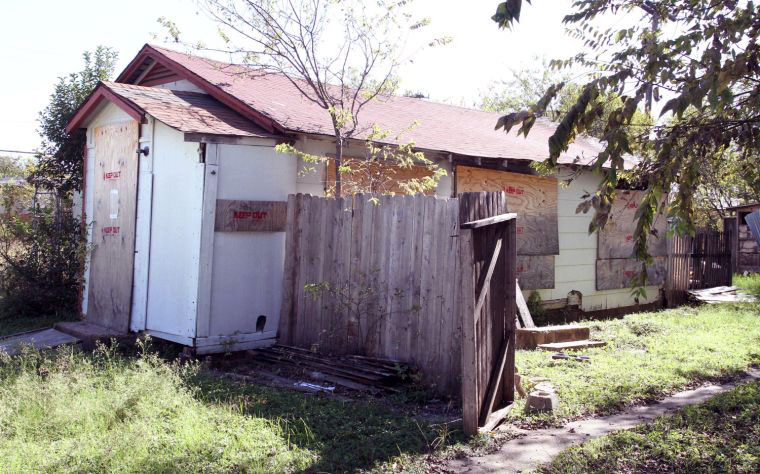
Quick Definition
Substandard housing is a residential property that fails to meet minimum health, safety, or structural standards required by California Health and Safety Code Section 17920.3. Common causes include lack of plumbing or heat, structural hazards, infestation, faulty wiring, lead, mold, or any condition the local enforcement agency finds dangerous to occupants.
If a building official declares your property substandard in California, the consequences are concrete: a Notice of Violation, a deadline to repair or vacate, daily accruing fines, recordation of a code-enforcement lien against title, and in extreme cases criminal misdemeanor charges. This guide explains the legal definition, exactly what makes a house substandard under state law, how the process works in Los Angeles, the difference between substandard, uninhabitable, and code-violated, and the fastest path back to compliance.
The Legal Definition: California Health & Safety Code § 17920.3
California does not leave “substandard” to opinion. The exact legal definition lives in Health and Safety Code Section 17920.3, which the State Housing Law applies statewide and every California city and county must enforce:
“Any building or portion thereof including any dwelling unit, guestroom or suite of rooms, or the premises on which the same is located, in which there exists any of the following listed conditions to an extent that endangers the life, limb, health, property, safety, or welfare of the public or the occupants thereof shall be deemed and hereby is declared to be a substandard building…”
– Cal. Health & Safety Code § 17920.3
The statute then enumerates roughly 14 categories of specific conditions that trigger a substandard determination. We list all of them below.
Substandard vs Uninhabitable vs Code Violation: What’s the Difference?
These three terms are used interchangeably in conversation but have distinct legal meanings, and which one applies determines what you have to do and how fast.
| Term | Legal Source | Typical Trigger | Consequence |
|---|---|---|---|
| Substandard | CA H&S Code § 17920.3 | Conditions endangering life, health, or safety | Order to repair or vacate, recorded lien, fines, REAP in LA |
| Uninhabitable | CA Civil Code § 1941.1 (tenancy) | Missing one of 11 “tenantability” requirements | Tenant rent withholding, repair-and-deduct, lease void |
| Code Violation | Local Municipal Code / LAMC in Los Angeles | Any breach of building, zoning, or safety code (severity varies) | Notice to Comply, administrative fines, permit blocks |
| Notice and Order | LAMC § 91.103 et seq. | LADBS formal notice following a substandard finding | 30 to 60 day cure period, then escalation |
Bottom line: every substandard building is also a code violation, but not every code violation rises to substandard. Substandard is the most serious civil status short of demolition orders.
The 14 Conditions That Make a Property Substandard in California
These come directly from H&S Code § 17920.3. If any one of them is present “to an extent that endangers the life, limb, health, property, safety, or welfare” of the occupants, the building meets the legal definition of substandard:
- Inadequate sanitation – no working toilet, sink, bathtub, or shower; no kitchen sink; lack of hot or cold running water; no operable connection to an approved sewage system.
- Structural hazards – deteriorated or inadequate foundations, defective or deteriorated flooring, members of ceilings or roofs that are unsafe, walls or partitions that split or buckle.
- Nuisance – any nuisance as defined by California law.
- Hazardous wiring – electrical wiring that was not installed in accordance with code at the time of installation, or has not been maintained in good and safe condition.
- Hazardous plumbing – plumbing fixtures, gas piping, or drainage that is not installed to code or has decayed past safe operation.
- Hazardous mechanical equipment – heating, ventilation, air conditioning, or other mechanical equipment not installed to code or maintained safely.
- Faulty weather protection – deteriorated or ineffective waterproofing of exterior walls, roof, foundations, or floors; broken windows or doors; defective or lack of weather protection for exterior wall coverings.
- Fire hazard – any building or portion that, due to its condition, occupancy, or location, is a fire hazard as defined by the state fire code.
- Faulty materials of construction – any material that is not allowed or approved by the state Housing Law or that has not been maintained in good and safe condition.
- Hazardous or unsanitary premises – accumulation of weeds, vegetation, junk, dead organic matter, debris, garbage, offal, rat harborage, stagnant water, combustible materials, or similar conditions.
- Inadequate maintenance – failing to maintain the building or any part of it in good condition.
- Inadequate exits – all buildings having insufficient exits to allow safe occupant egress under emergency conditions.
- Inadequate fire-protection or fire-fighting equipment – any building lacking required smoke detectors, sprinklers, or fire-rated assemblies.
- Improper occupancy – any building occupied by more persons than permitted, or used for a purpose other than that for which it was designed or intended.
Got a Notice and Order?
If LADBS, LAHD, or your local enforcement agency has declared your property substandard, you typically have 30 to 60 days before fines begin accruing. CCS Inc has resolved hundreds of substandard cases across Los Angeles, Orange, and Ventura Counties.
How the Substandard Process Works in Los Angeles
In Los Angeles, three agencies can declare a residential property substandard, and the path varies depending on which one is involved:
- LADBS (Los Angeles Department of Building and Safety) – handles owner-occupied homes and structural / building-code substandard findings under the LAMC. Issues a Notice and Order with 30 to 60 days to cure.
- LAHD (Los Angeles Housing Department) – handles rented residential buildings. Substandard findings trigger the Rent Escrow Account Program (REAP), where tenants pay rent into escrow until the owner cures.
- LA County Public Health – handles health-driven substandard conditions (mold, infestation, lead) in unincorporated areas.
The general workflow follows five steps:
- Complaint or routine inspection – filed by a tenant, neighbor, or generated during a routine sweep.
- Field inspection – an inspector documents the conditions and references the specific 17920.3 categories triggered.
- Notice and Order issued – the property owner receives a formal notice with a list of violations, a cure deadline, and right-to-appeal language.
- Compliance verification – after work is complete, the owner requests a re-inspection. If conditions are resolved, the case closes.
- Escalation if unresolved – administrative citations, recorded lien on title, REAP for rentals, vacate orders, and criminal misdemeanor referrals to the City Attorney.
Penalties for Ignoring a Substandard Determination
The cost of doing nothing escalates fast. The longer the property remains in substandard condition after the deadline, the more expensive the resolution becomes:
- Inspection and re-inspection fees – starting around $400 to $1,200 per inspection, billed to the owner.
- Administrative citation fines – $100 to $1,000 per violation, per day, depending on severity.
- Recorded lien against title – all unpaid fees, fines, and city work attach as a lien to the property and must be cleared at sale.
- REAP enrollment for rental properties – up to 50% rent reduction paid into escrow, plus a $50 monthly REAP fee per unit.
- Order to Vacate – tenants are relocated at owner expense, with statutory relocation assistance ranging from a few thousand to $20,000+ per unit.
- Criminal misdemeanor charges – the City Attorney can prosecute willful failure to repair, with fines up to $1,000 and up to six months in county jail per violation.
If You’re the Owner: How to Resolve a Substandard Order
- Get the case file and inspector’s report from the issuing agency. Every cited violation must be matched to a specific H&S Code 17920.3 category.
- Hire a licensed contractor familiar with substandard remediation. Permits are required for most repairs that touch electrical, plumbing, structural, or mechanical systems.
- Pull the right permits before starting work. Doing repairs without permits is itself a violation and will not satisfy the Notice and Order.
- Schedule re-inspection through the issuing agency once work is done. Each cited item must be visually verified.
- Pay outstanding fines and lien releases to close the case. Title-attached liens require a formal release recorded with the County Recorder.
If You’re the Tenant: Your Rights Under California Law
California tenants living in substandard housing have several state-law remedies, even when the landlord refuses to act:
- Written notice to the landlord – the first step. Keep proof of delivery; this is the foundation of every later remedy.
- Repair and deduct (Civil Code § 1942) – tenants may make repairs and deduct the cost from rent, up to one month’s rent, twice per 12-month period.
- Rent withholding – tenants may withhold rent for serious habitability defects, though this requires documentation and is risky without legal advice.
- Complaint to the enforcement agency – in LA, this is LAHD for rental units. Substandard findings can place the building into REAP.
- Constructive eviction – if conditions are uninhabitable, tenants may vacate and treat the lease as terminated, although a lawsuit is typically required to recover damages.
- Civil lawsuit – for rent abatement, relocation costs, and statutory damages.
Frequently Asked Questions
What is substandard housing in simple terms?
A residential property is substandard when conditions inside it endanger the health or safety of the people living there. California law defines this in Health & Safety Code 17920.3 and lists specific triggers like broken plumbing, faulty wiring, structural defects, infestation, or lack of weather protection.
Who decides if a house is substandard?
A local code-enforcement officer makes the determination after a field inspection. In Los Angeles, that’s usually a LADBS or LAHD inspector. The finding is documented in a Notice and Order that cites the specific 17920.3 categories triggered.
Is substandard housing illegal in California?
Yes. Letting a property fall into or remain in substandard condition is a violation of state law and almost every local municipal code. Owners are required to repair or vacate the building. Willful failure to act can be charged as a criminal misdemeanor.
How long do I have to fix a substandard order?
Typically 30 to 60 days from the date the Notice and Order is served, although severe life-safety conditions can trigger immediate vacate orders. The notice itself states the exact cure deadline. Extensions are sometimes granted if the owner can show a credible repair plan.
Can I sell a house that’s been declared substandard?
You can, but the substandard finding and any recorded lien must be disclosed to the buyer and addressed at closing. Most lenders will not finance a substandard property, so sales typically happen at a discount, in cash, or contingent on completed repairs.
What’s the difference between substandard and uninhabitable?
Substandard is a code-enforcement status under H&S Code 17920.3 used by the building department. Uninhabitable is a tenancy concept under Civil Code 1941.1 that gives tenants the right to rent withholding, repair and deduct, or lease termination. The same conditions usually trigger both, but the legal remedies are different.
Does mold by itself make a house substandard?
Visible mold can trigger a substandard finding when it stems from an underlying H&S Code 17920.3 condition – usually faulty plumbing, faulty weather protection, or inadequate sanitation. Surface mold from a one-time event without an ongoing moisture source is typically a code violation but not necessarily substandard.
Resolve a Substandard Order with CCS Inc
CCS Inc is a licensed General B Contractor and full-service compliance firm based in Los Angeles. Our team handles substandard cases end to end: case-file review, scope of work, permits, repair construction, re-inspection, and lien clearance. We work with LADBS, LAHD, the City Attorney, and County Public Health daily.
Free 15-minute case review with a licensed compliance expert. No obligation.
Related Resources
Free 15-minute consultation. No pressure, just a clear next step.
A licensed compliance specialist reviews your permit history and answers your questions. We'll tell you if there's a problem - and what to do about it.